How to choose the best HDD directional drill for utility and fiber work
Key Takeaways
- Most fiber and utility jobs do not require the same HDD drill. Bore length, soil conditions and product diameter should guide your selection.
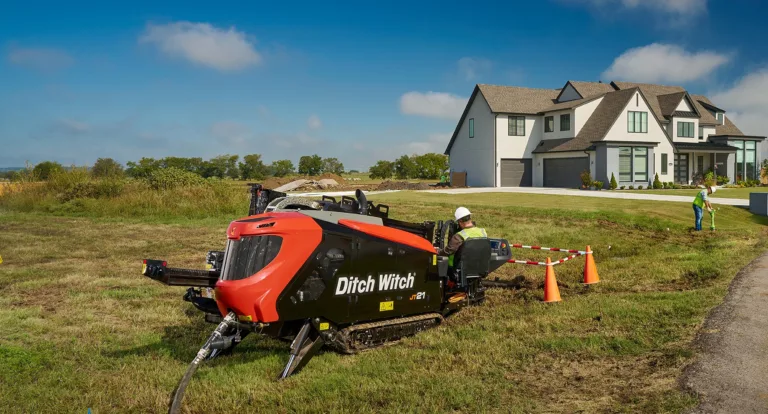
- Compact HDD drills like the JT21 are ideal for neighborhood fiber installs and tight-access utility work where maneuverability matters most.
- Larger HDD drills like the JT24 are necessary for longer bores and bigger conduit, delivering the torque and pullback needed to maintain productivity and reduce machine strain.
JT21 vs. JT24: Which directional drill is right for your job?
Utility and fiber installation projects often get lumped together as if they place the same demands on equipment. In reality, jobsite conditions, bore plans and product diameter can vary widely from one project to the next. Choosing the best horizontal directional drill is less about popularity and more about understanding what your typical work actually requires.
A smart approach starts by looking at the bore itself. Soil conditions, bore length and depth, available space on the jobsite and the diameter of the product being installed all play a role in determining the drill you need. Fiber installations, especially in neighborhoods and urban areas, often involve tight access and shorter runs. Utility work may introduce heavier product, tougher ground and longer shots that quickly increase the demands placed on the machine.
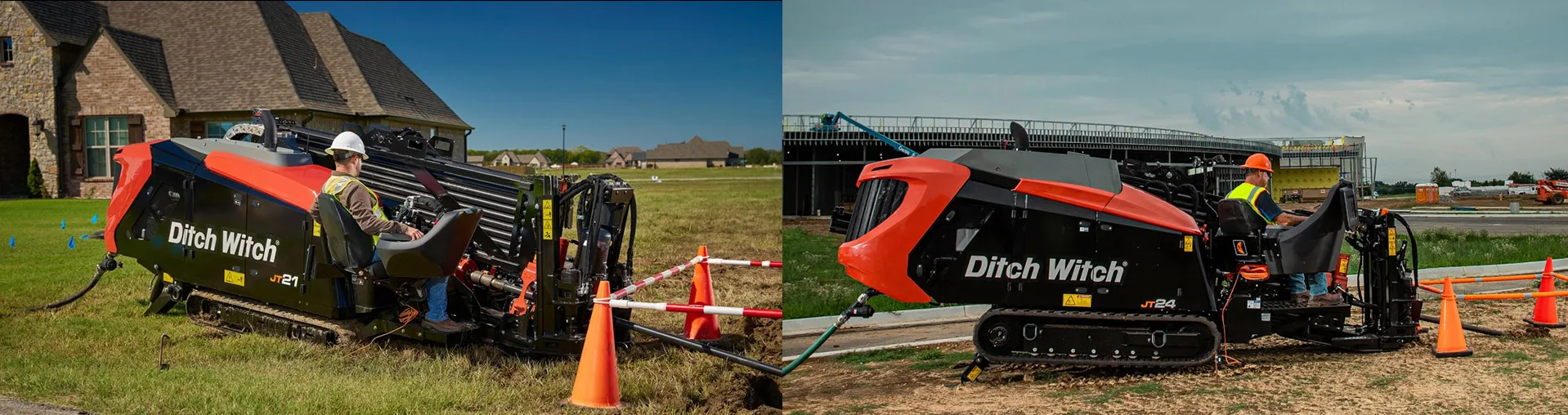
For many contractors focused on residential utilities and standard fiber installs, the Ditch Witch JT21 is an excellent match. Its compact footprint of only 55.5 inches wide and 218 inches long, allows crews to work comfortably in confined spaces while still delivering the power needed for typical service installations. It is maneuverable, efficient and well suited for the majority of neighborhood drilling tasks.
However, project requirements have a way of growing. As bore lengths increase and conduit diameter gets larger, the load placed on the drill rises significantly. What begins as a routine fiber job can quickly require more pullback force and torque than a smaller class drill is designed to provide. This is where the Ditch Witch JT24 continues to be the right choice. With increased thrust and pullback of 24,000 lbs, and rotary torque of 3,000 ft/lbs, the JT24 is built to handle larger diameter product and more demanding bores without overworking the machine or slowing down the crew.
Does jobsite access play a role in the size of the directional drill needed?
Jobsite access also plays a major role in drill selection. Many fiber and utility projects take place in easements, yards and congested areas where a large footprint creates challenges of its own. Compact drills shine in these environments, but stepping up in size when the work demands it ensures crews are not pushing a machine beyond its intended limits.
Does operator experience matter when choosing an HDD directional drill?
Operator experience should not be overlooked. Directional drilling is precision work that depends on clear controls and good visibility. A comfortable operator is a productive operator and having common and familiar controls allows operators to be confident across many drill classes.
What factors affect the total cost of an HDD directional drill?
Finally, the true cost of a drill is measured over its lifetime, not on the initial investment. Fuel efficiency, maintenance requirements, dealer support and resale value all contribute to long- term value. A drill that is properly matched to your work will last longer and perform more consistently.
Choosing the best HDD directional drill for utility and fiber work comes down to understanding the demands of your jobs and selecting equipment that can meet those demands without strain. For everyday neighborhood service and fiber installs, the JT21 fits the work well. When the project includes longer bores or larger diameter product, the JT24 is still the drill that delivers the performance needed to get the job done right.